October 12, 2026 · 3 min read
Your Evening Light Exposure Is Bigger Than Your Phone
Putting your phone away is only part of the evening picture. Look at brightness, distance, timing and the rooms you move through before bed.
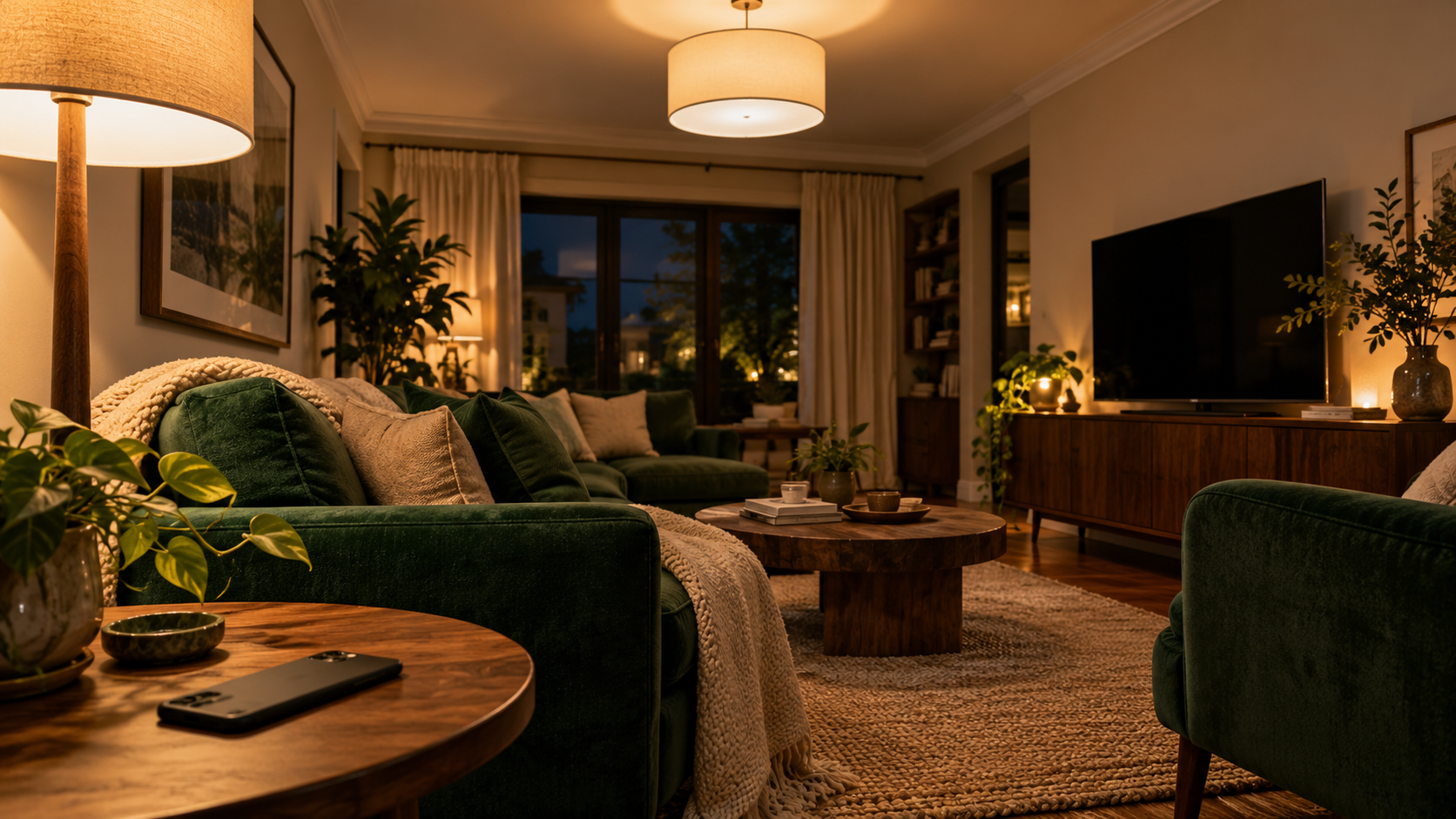
You put your phone on charge, close your laptop and congratulate yourself on a screen-free evening.
Then you sit beneath a bright ceiling light, watch television and finish getting ready in a brightly lit bathroom.
The phone is gone. The evening light has not.
Look at the whole environment
Light is one of the signals your body uses to organise sleep and wakefulness. That makes your surroundings relevant, even when you are not scrolling.
This does not mean every lamp causes sleep problems. It means a phone-only rule can miss much of the picture.
Start with the spaces you actually use. A routine that looks calm in the living room may feel very different once you enter the kitchen or bathroom.
Brightness, distance and timing
Three questions make an evening light audit easier.
How bright does the environment feel? How close are the light sources? And when are you exposed to them?
A screen held near your eyes and a television across the room create different viewing conditions. But distance alone does not tell you the total effect: screen brightness, room lighting, duration and individual sensitivity also matter.
Use these questions as an observation framework, rather than a formula that promises to predict your sleep.
Follow your normal evening
Tonight, walk through your usual routine before changing anything.
##
- Notice the main lights in each room.
- Check whether you use overhead lighting when a smaller lamp would be sufficient.
- Notice where screens sit and how bright they feel.
- Include the final trip to the bathroom.
- Look for light entering the bedroom from outside.
Keep enough illumination to move safely, read comfortably and complete necessary tasks. A useful wind-down should not create a fall risk.
Try one practical adjustment
Choose the easiest part of the audit to change.
Perhaps that means switching off an unnecessary ceiling light. Perhaps it means moving a bright device out of your bedroom or doing your final household tasks earlier.
Avoid turning the experiment into a collection of strict rules. If your work or family responsibilities require evening screens, focus on the adjustments you can realistically maintain.
Notice comfort and routine over several evenings. One good or bad night cannot prove which factor caused the difference.
Your phone is part of the picture
A calmer light environment cannot guarantee sleep, and screen content can be stimulating for reasons beyond its light.
The useful shift is to stop asking only, “Did I use my phone?”
Ask, “What did my whole evening look like?”
Explore SleepShift below for a more structured approach to your evening routine.
Further reading
NIH — Your Sleep/Wake Cycle: https://www.nhlbi.nih.gov/health/sleep/sleep-wake-cycle
Start the Shift tonight
Explore the SleepShift protocol and take a more structured approach to your evening routine.
More from the journal
October 12, 2026 · 4 min
Why You Feel Exhausted at 10PM but Wide Awake at Midnight
Exhausted on the sofa, alert in bed? Learn how sleep pressure, your body clock and your evening routine can influence that frustrating second wind.
October 12, 2026 · 3 min
Dimmer, Warmer, Earlier: Create an Evening Light Transition
A calmer evening can begin before you reach the bedroom. Use three simple prompts to make your lighting routine easier to repeat.