October 12, 2026 · 3 min read
Dimmer, Warmer, Earlier: Create an Evening Light Transition
A calmer evening can begin before you reach the bedroom. Use three simple prompts to make your lighting routine easier to repeat.
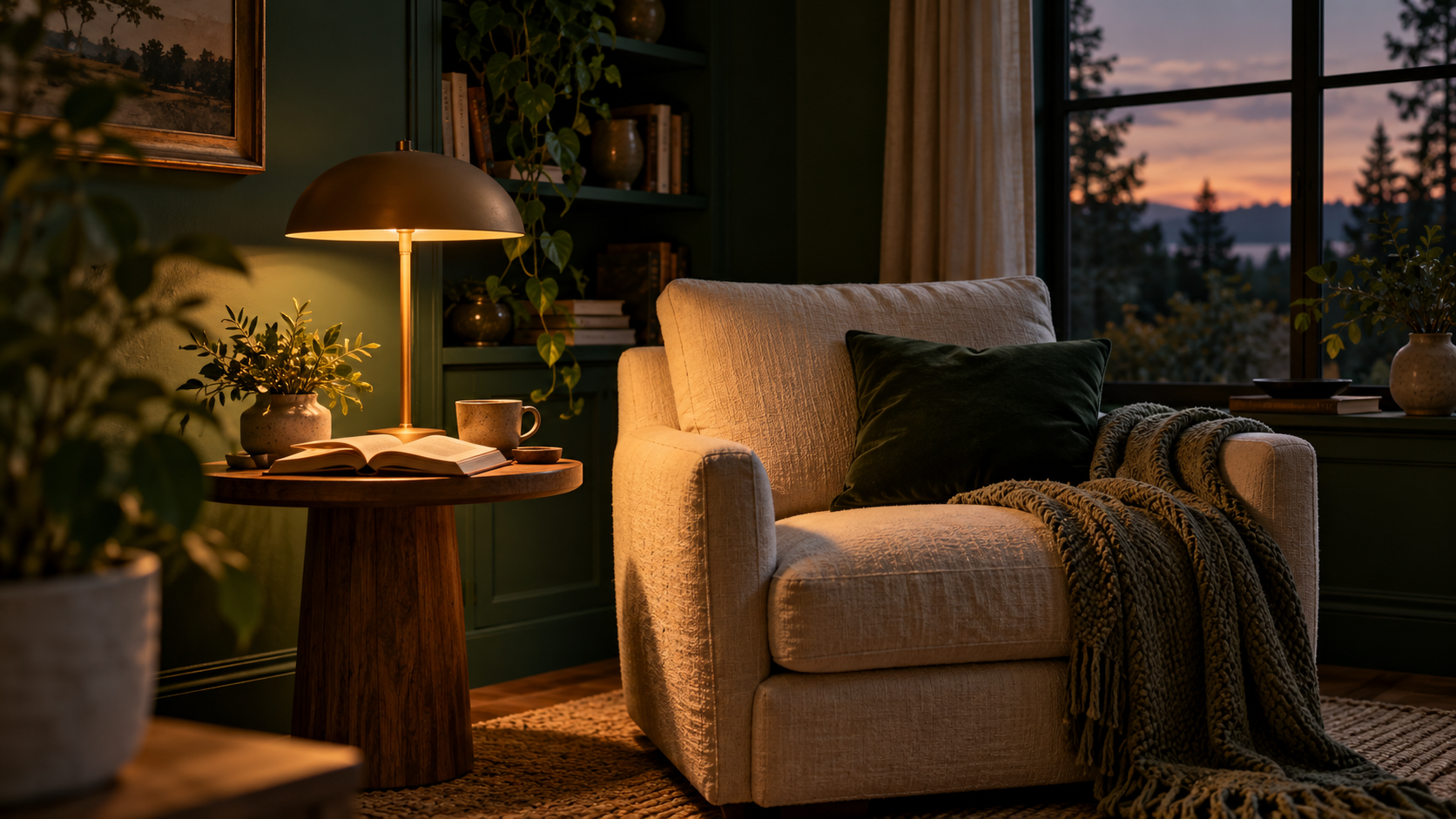
You would not expect a busy room to become quiet without anyone changing what they are doing.
Yet bedtime often comes with that expectation. The house stays bright and active until the moment you get into bed, and then you want sleep to arrive immediately.
An evening light transition gives you a way to make the change more gradual.
Three prompts, not a medical protocol
Dimmer. Warmer. Earlier.
These words are reminders for reviewing your environment. They are not a guaranteed treatment, a precise scientific formula or instructions to purchase special equipment.
Light is a timing cue for your body clock. The practical question is whether your evening surroundings could become more comfortable as the day winds down.
Dimmer: remove unnecessary brightness
Start with the lights you do not need.
Could you use a reading lamp rather than lighting the entire room? Does the television need its brightest setting? Are several rooms illuminated when you are using only one?
Reduce excess while keeping enough light for safe movement and comfortable tasks. The aim is a workable evening, not darkness at all costs.
Warmer: choose a comfortable atmosphere
Many people find softer, warmer-looking lighting pleasant in the evening.
But colour is not the whole story. A very bright warm lamp is still a bright light. The amount of light reaching your eyes, its timing and its duration also matter.
Treat warmer lighting as a design preference within the broader routine, rather than proof that a particular bulb is “sleep-safe.”
Earlier: make the transition part of the routine
Do not wait until you are already lying in bed to think about the environment.
Choose a familiar cue, such as finishing dinner, washing up or starting your final quiet activity. Use that cue to begin switching off unnecessary lights and winding down demanding tasks.
You do not need a universal countdown. Pick a transition that fits your household and gives you time to settle.
Make it repeatable
A routine that works only when everyone else has left the house will be difficult to sustain.
- Choose one room you can control.
- Make the necessary lamps easy to reach.
- Keep pathways safely lit.
- Discuss shared lighting preferences with your household.
- Adjust for practical needs rather than abandoning the routine completely.
Observe whether the change makes the evening more comfortable. Avoid judging the entire idea by one night.
Let evening look like evening
Lighting is only one part of sleep. Stress, health, caffeine and your schedule may still matter.
You are creating a gentler transition, not commanding your body to sleep.
Explore SleepShift below if you would like a more structured approach to your evening routine.
Further reading
NIH — Healthy Sleep Habits: https://www.nhlbi.nih.gov/health/sleep-deprivation/healthy-sleep-habits
Start the Shift tonight
Explore the SleepShift protocol and take a more structured approach to your evening routine.
More from the journal
October 12, 2026 · 3 min
There Is No Magic Bedtime: Find a Schedule That Fits
A bedtime needs to work alongside your wake time, sleep needs and daily responsibilities. Here is a better starting point than copying someone else's routine.
October 12, 2026 · 4 min
Why You Feel Exhausted at 10PM but Wide Awake at Midnight
Exhausted on the sofa, alert in bed? Learn how sleep pressure, your body clock and your evening routine can influence that frustrating second wind.